Clearing the Queue: Why Gamers Across America Are Ditching Their Massive Libraries and Loving It
There's a specific kind of anxiety that comes with opening your game library and seeing 400 titles staring back at you. Not excitement — anxiety. That creeping guilt that whispers, you paid for all of this and you've touched maybe thirty of them. For a long time, gamers just kind of accepted that feeling as part of the hobby. You collected, you accumulated, you bragged about the numbers. The size of your Steam library was a badge of honor.
But that mindset is quietly cracking apart. Across the country, players are doing something that would have seemed almost radical five years ago: they're purging. Selling off physical collections, nuking digital wishlists, canceling subscription services, and walking away from hundreds of unplayed games without a shred of regret. And a lot of them say it's the best gaming-related decision they've ever made.
When More Stopped Feeling Like Better
Ask anyone who's gone through a serious library purge and they'll usually point to a single moment — a breaking point where the collection stopped feeling like abundance and started feeling like a burden.
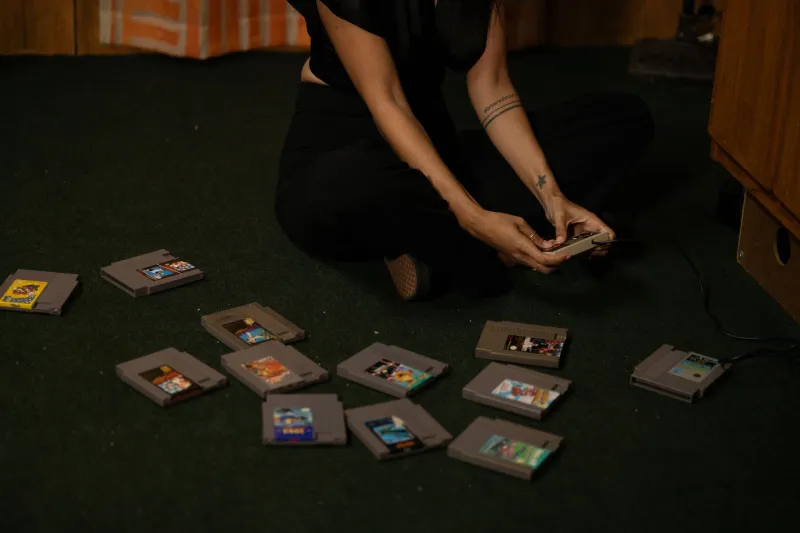
For Marcus, a 34-year-old teacher from Ohio, it was moving apartments. "I had three shelves of physical games, a PlayStation library, a Switch library, and like 600 games on Steam," he says. "When I was packing boxes, I realized I genuinely couldn't remember the last time I'd finished something. I was just... collecting. Not playing."
He sold off most of his physical collection on eBay and Facebook Marketplace, cleared out anything on Steam he hadn't touched in two years, and kept roughly forty titles he actually cared about. "The first weekend after I did it, I sat down and actually finished a game. First time in months. It felt incredible."
This kind of story is becoming more common. The psychology behind it isn't complicated once you dig in. Researchers have long studied what's called the "paradox of choice" — the idea that having too many options doesn't make people happier, it paralyzes them. Gaming libraries have essentially become a stress machine built on that exact principle. Every unplayed game is a small, silent accusation.
The Subscription Era Made It Worse
Here's the thing that supercharged the backlog problem: subscription services. Xbox Game Pass, PlayStation Plus, Nintendo's online catalog — these platforms handed players hundreds of games a month for a flat fee. On paper, incredible value. In practice, a psychological disaster for anyone prone to overcollecting.
"Game Pass broke my brain for a while," admits Priya, a 28-year-old from Atlanta who describes herself as a recovering hoarder of digital content. "I was adding games to my library constantly because they were going to leave the service. I never wanted to miss out. But I wasn't playing them — I was just saving them. Like canning vegetables I'd never eat."
Priya eventually canceled her subscription for three months just to reset her habits. She came back, but with a new rule: one game at a time, finish it or consciously abandon it, then move on. "It sounds simple but it completely changed how I feel about gaming. I'm actually present when I play now instead of mentally cataloging what I should be playing instead."
The Minimalist Gamer Movement
It would be easy to write this off as a niche trend, but the numbers suggest it's broader than that. Subreddits focused on gaming minimalism have grown significantly over the past couple of years. Posts about completed backlogs and sold collections rack up thousands of upvotes. There's a real hunger for permission to own less.
Some players are going even further, embracing what they call a "one in, one out" policy — you can only add a new game to your collection after finishing or removing one you already own. Others have adopted strict physical-only rules to create a natural financial ceiling on how much they can accumulate. The friction of actually spending money on a disc, they say, makes them way more intentional about what they buy.
Then there are the streamers and game-passers who've given up ownership entirely. They rent access, play what they want, and feel zero guilt when they bounce off something after an hour. No sunk cost, no shelf of shame.
"I used to feel like I had to justify every purchase by finishing the game," says Derek, a 41-year-old dad from Portland who streams casually on weekends. "Now I just subscribe, play whatever sounds fun, and if it doesn't grab me in a few hours, I move on. My relationship with gaming is so much healthier."
What You Actually Lose (And What You Don't)
It's worth being honest: there are real trade-offs to the great purge. Physical collections have genuine value — emotional, financial, and cultural. Some of those games you're selling for ten bucks will be worth a lot more in fifteen years. Rare titles, limited editions, beloved classics — those don't come back once they're gone.
And some players will always be collectors at heart. There's nothing wrong with that. The problem isn't owning games; it's the guilt spiral that comes when ownership outpaces enjoyment. If your collection genuinely brings you joy — if you look at those shelves and feel pride rather than dread — then none of this applies to you.
But for a growing number of players, the collection had stopped being about joy a long time ago. It was habit, FOMO, and sunk-cost thinking dressed up as enthusiasm.
Finding Your Own Reset Point
You don't have to torch everything to get the benefit. Even small resets can shift your relationship with gaming in meaningful ways.
Start by being honest about what you actually want to play versus what you feel like you should play. Those are very different lists. Uninstall anything you haven't opened in six months. Remove games from your wishlist that you've been "meaning to get to" for years. Give yourself permission to not finish things that aren't fun.
The goal isn't minimalism for its own sake. It's reclaiming the feeling that made you love games in the first place — that pure, uncomplicated excitement of sitting down with something you actually want to play.
For a lot of people who've gone through a purge, that feeling came back stronger than expected. The library got smaller. The fun got bigger. Turns out, sometimes the best thing you can do for your gaming life is get rid of most of it.