Always Online, Always Alone: The Hidden Loneliness Hiding Inside Multiplayer Gaming
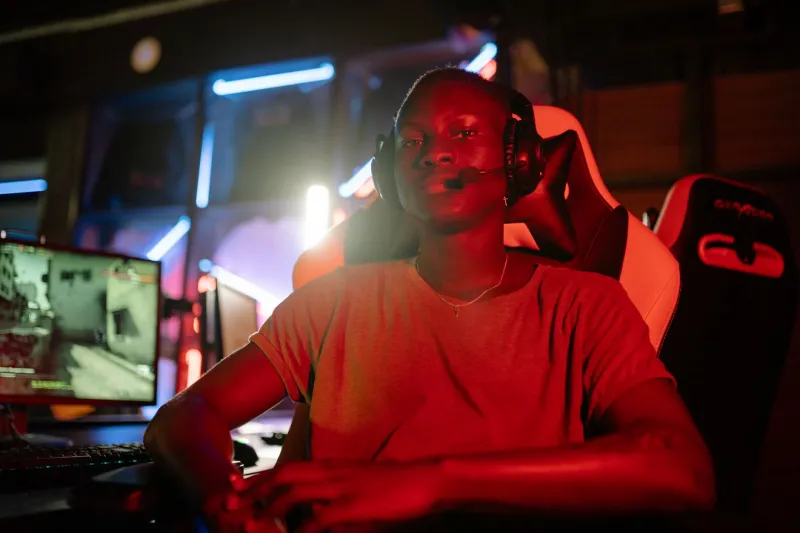
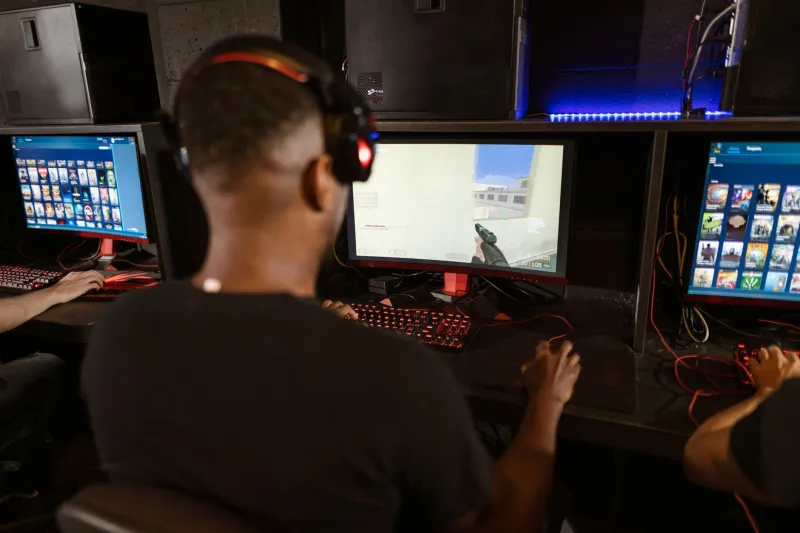
There's a particular kind of quiet that settles in after a multiplayer match ends. Your team scattered back to their own corners of the internet. Nobody said goodbye. The lobby dissolved before you could type a word. You queue up again, get dropped into a fresh game with five more strangers, and the whole cycle repeats. You've been "playing with others" for three hours, and somehow you feel more isolated than if you'd just stayed offline entirely.
This isn't a niche complaint. It's a widespread, creeping reality that researchers, psychologists, and everyday gamers across the US are starting to name out loud: online multiplayer, for all its promise of connection, has quietly become one of gaming's loneliest experiences.
The Promise That Got Sold to Us
Cast your mind back to the early 2000s, when broadband internet started reaching American households at scale. The pitch was electric. You wouldn't just play games anymore — you'd play with the world. Friends across states, strangers who'd become teammates, communities that lasted years. Xbox Live, early MMOs, even the clunky matchmaking systems of the PS2 era all carried this sense of possibility. Gaming was finally going to be social.
And for a while, it genuinely was. Early online gaming spaces were rough around the edges, but they were alive. People talked. Voice chat was chaotic and weird and sometimes terrible, but it was human. You learned people's gamertags, recognized playstyles, built something resembling familiarity.
Somewhere along the way, that energy got optimized out of existence.
When Algorithms Replaced Actual Matchmaking
Modern matchmaking systems are engineering marvels. They balance skill ratings, connection speeds, and regional data to create "fair" matches with remarkable precision. What they can't measure — and don't particularly try to — is social chemistry.
Today's matchmaking doesn't pair you with people you might actually vibe with. It pairs you with people who exist at roughly your competitive tier. The result is a constant rotation of strangers who have exactly one thing in common with you: their K/D ratio. There's no mechanism for "I liked playing with that person, let me find them again" beyond manually friend-requesting someone who probably won't accept.
Dr. Amanda Lenhart, who has researched teen and young adult social behavior around digital spaces, has noted that online gaming's social potential is frequently undermined by design systems that prioritize performance metrics over relationship-building. The game gets optimized. The human part gets left behind.
Toxicity Killed the Third Place
Sociologists have long talked about the concept of a "third place" — somewhere that isn't home and isn't work, where people gather informally and build community. Bowling alleys. Barbershops. Diners. For a generation of American gamers, online spaces were supposed to serve that function.
Toxic behavior torched a lot of that potential. Spend enough time in public lobbies across popular shooters, battle royales, or competitive MOBAs and you'll encounter a consistent pattern: silence punctuated by hostility. Players either don't communicate at all, or they communicate in ways designed to demean. Slurs, harassment, rage-quitting, deliberate griefing — the social cost of open communication got high enough that most players simply opted out.
Voice chat usage in major multiplayer titles has reportedly declined significantly over the past decade. Players mute by default now. It's a rational response to a genuinely unpleasant environment, but it also means the multiplayer experience has become fundamentally non-verbal, non-social, and oddly solitary despite the player count.
The Single-Player Island Inside Multiplayer Games
Here's a strange twist: some of the most popular "multiplayer" experiences in America right now are ones where players barely interact with each other meaningfully at all. Open-world games with optional co-op. Battle royales where you're eliminated quickly and spend more time spectating than playing. Live-service titles where you're technically sharing a server with dozens of people but functionally moving through your own content checklist.
Even in games explicitly designed around cooperation, the trend toward pre-made content guides and optimized builds means players are often following scripts rather than improvising together. You're not really playing with someone when you're both just executing the same YouTube tutorial in parallel.
The social texture has been stripped out, leaving behind a kind of hollow togetherness. You're present. They're present. Nobody's really there.
What the Numbers Are Starting to Show
The American Psychological Association and various academic researchers studying social media and digital interaction have documented a consistent paradox: increased digital connectivity correlates with increased reported loneliness, particularly among younger adults. Gaming is part of that larger picture.
A 2023 survey from the entertainment research group Interpret found that a notable percentage of US gamers described feeling "socially unfulfilled" by their online gaming experiences despite playing regularly with others. The feeling wasn't tied to how much they played — it was tied to the quality of interaction, which most described as shallow or nonexistent.
This matters because gaming was, for many Americans, a primary social outlet — especially during and after the pandemic years when in-person connection was limited or impossible. When that outlet fails to deliver genuine connection, the loneliness doesn't just stay the same. It compounds.
The Communities That Still Work
It's worth being clear: this isn't a eulogy for online gaming's social potential. There are communities that genuinely deliver — Discord servers built around specific games or creators, guild structures in MMOs that require real coordination, co-op experiences designed explicitly around communication. Games like Deep Rock Galactic have developed reputations for unusually positive player communities. Tabletop adaptations and cooperative board game titles that moved online have maintained warmth partly because their design demands actual collaboration.
The difference, consistently, is intentionality. Communities that feel real tend to exist around games rather than inside them — built in adjacent spaces where people can talk, organize, and actually get to know each other outside of match timers and kill feeds.
What Would Actually Help
Some game designers are starting to pay attention. There's growing conversation in the industry about building "social infrastructure" back into multiplayer experiences — persistent lobbies, reputation systems that reward positive interaction, tools that make it easier to find and reconnect with compatible players. Whether publishers invest in these features or continue chasing engagement metrics that don't capture loneliness is an open question.
For individual players, the honest advice is a little old-fashioned: the connection you're looking for probably isn't going to come from a random matchmade lobby. It's going to come from finding a specific community — a subreddit, a Discord, a regular game night with actual friends — and investing in it deliberately.
Online gaming can still be one of the best social experiences available. It's just that the social part rarely happens automatically anymore. You have to build it yourself, in the spaces the algorithms forgot to optimize.
And maybe that's always been true. The best gaming memories most of us carry aren't about the games themselves — they're about the people we played them with. Finding those people in 2024 just takes a little more effort than the matchmaking screen suggests.