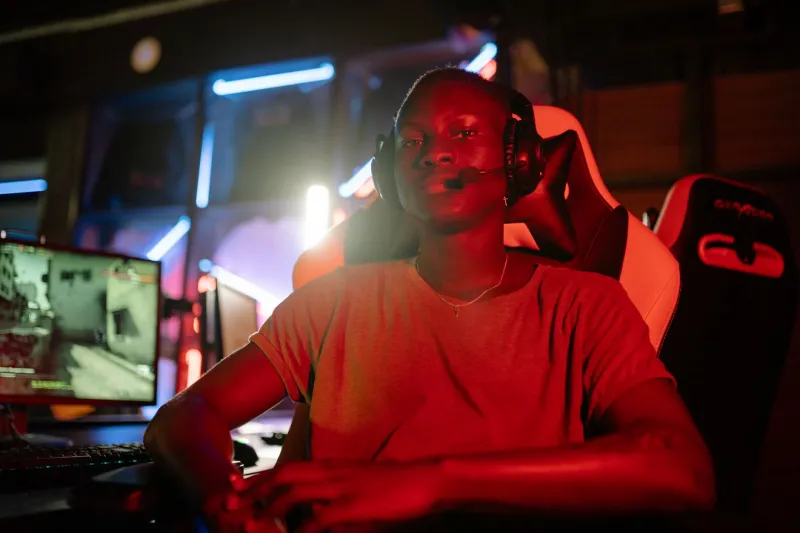
Thousands of Players, Zero Real Connection: How Online Gaming Lost Its Soul
Log into almost any major online game right now and the numbers look great. Tens of thousands of concurrent players. Full lobbies. Short queue times. By every metric a developer would point to in a quarterly report, the game is thriving.
So why does it feel like wandering through an airport at 3 a.m.?
There are people everywhere — technically — but nobody's really there. No one's chatting. Nobody's goofing off in the pre-game lobby. You don't recognize any names. You'll never see these people again. You finish the match, get dumped back into a menu, and the whole cycle repeats. It's gaming as conveyor belt, and a lot of players across the US are starting to notice that something essential has gone missing.
The Matchmaking Miracle That Backfired
Backfill a few years and the pitch for modern matchmaking was genuinely exciting. No more sitting in a server browser hunting for a game with acceptable ping. No more joining a match already in progress where your team is down 40 points. Algorithms would handle everything — find you opponents at your skill level, balance the teams, get you into a fair, smooth experience in under a minute.
It worked, technically. Queue times dropped. Matches became more balanced. Skill-based matchmaking, or SBMM as the community calls it, became the industry standard almost overnight.
But here's what nobody really talked about: that same system quietly destroyed the concept of a regular crowd. When you were dropped into a specific regional server or a community-run lobby back in the day, you'd see the same usernames pop up over and over. You'd develop rivalries. You'd recognize the guy who always played support, the one who trash-talked but was secretly terrible, the one who'd been on the server longer than anyone. Those repeated encounters built something — not quite friendship, but texture. Context. A sense that this place had a history.
SBMM doesn't care about any of that. Its job is to find you a statistically appropriate opponent, not a memorable one. Every lobby is a clean slate. Every match is disposable.
Regional Servers and the Death of the Local Scene
It goes deeper than matchmaking algorithms. The infrastructure of modern online gaming has fundamentally reorganized itself in ways that quietly erase geographic community.
Old-school server browsers let you filter by location. You'd find the Chicago server you always played on, or the West Coast hub that had the best community. Players in the same time zone, with similar schedules, gravitating toward the same spaces — that's how local gaming scenes formed online. People from the same city ended up playing together constantly, sometimes without even knowing it.
Now? Most games route you through centralized systems that optimize for latency and load balancing across massive regions. You might be matched with someone in Seattle, someone in Miami, and someone in rural Ohio all in the same lobby, with the algorithm treating geographic proximity as essentially irrelevant. The result is technically efficient and socially sterile. There's no your server anymore. There's just the server.
When Competition Ate the Culture
There's another force at work here that doesn't get discussed enough: the relentless push toward competitive play has fundamentally changed the emotional temperature of online gaming.
A decade ago, plenty of popular online games had a casual mode that was genuinely casual — a space where you could mess around, experiment, and interact without every moment being measured against a rank or a stat line. That space has shrunk dramatically. The rise of ranked modes, battle passes tied to performance metrics, and content creator culture (where every session is potentially content that needs to look competent) has turned even nominally relaxed lobbies into low-key pressure cookers.
When the stakes feel constant, the vibe changes. Players stop talking in voice chat because saying the wrong thing might tilt a teammate. Nobody experiments with weird builds because losing isn't just losing — it might cost them rank points. The whole social layer of gaming, the part that was always a little chaotic and unpredictable and fun, gets compressed under the weight of optimization.
You end up with lobbies full of people playing their best, communicating in pings and preset callouts, and never actually connecting with another human being.
The Texture That Used to Be There
Ask anyone who played MMOs in their heyday, or who spent serious time in early Call of Duty lobbies, or who remembers Halo 2's matchmaking when it was genuinely new, and they'll describe something that sounds almost quaint by today's standards: hanging out.
People would sit in lobbies between matches just talking. They'd form impromptu alliances with strangers. They'd get into dumb arguments about nothing. They'd develop in-jokes with people they'd never meet in real life. The game was the context, but the social interaction was the actual experience.
That texture — messy, unoptimized, occasionally annoying, often genuinely joyful — is almost entirely gone from mainstream online gaming. It's been engineered out in the name of efficiency and fairness and keeping the numbers clean.
Nobody's Home
What's left is a strange kind of loneliness that's hard to articulate because it exists alongside genuine player counts. These games aren't empty in any measurable sense. But they feel empty, and that feeling is real and it matters.
Some players are finding their way back to community through Discord servers, subreddits, and streamer communities that recreate the social texture outside the game itself. Others are gravitating toward smaller indie titles or older games with persistent servers where regulars actually exist. A few are simply logging off.
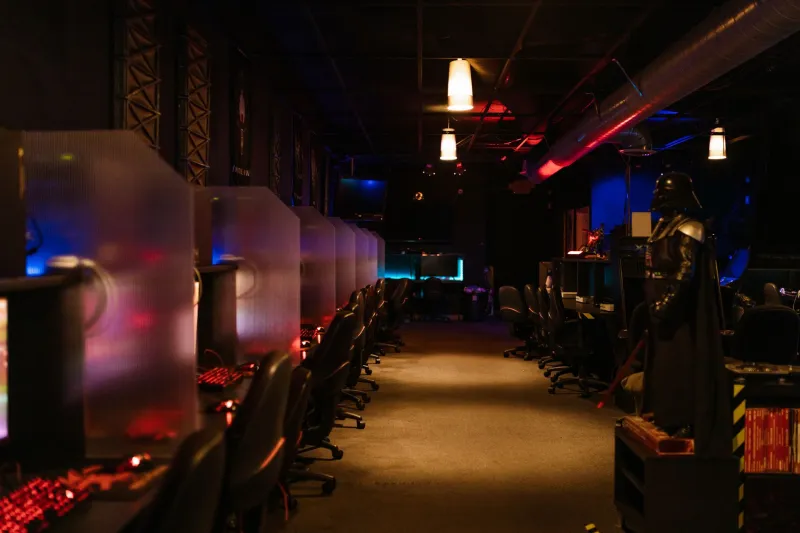
The irony is rich: the more sophisticated our online gaming infrastructure gets, the harder it becomes to feel like you're actually playing with people rather than just alongside them. All those algorithms, all that server optimization, all that matchmaking precision — and somehow the end result is a ghost town with great lighting.
Maybe the next frontier for online gaming isn't better balance or faster queues. Maybe it's figuring out how to make people feel like they belong somewhere again.