Why Millions of Americans Would Rather Watch Someone Else Play Than Pick Up a Controller
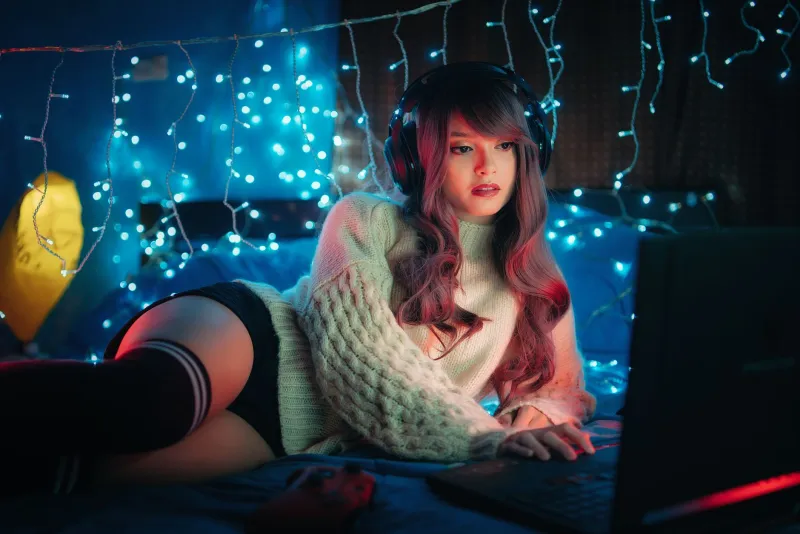
Picture this: it's a Saturday afternoon, you've got a few free hours, and instead of loading up a game, you flip on a stream. Someone else is playing — maybe it's a horror game you'd never have the nerve to finish yourself, maybe it's a massive open-world RPG you've been curious about but haven't committed to, maybe it's just your favorite streamer doing their thing. You grab a snack, get comfortable, and spend the next two hours watching.
If that sounds familiar, you're in very large company. The rise of gaming spectatorship is one of the stranger and more fascinating cultural shifts of the last decade. Twitch pulls in tens of millions of viewers every month. YouTube Gaming is a content machine that never sleeps. And a growing segment of the American gaming audience — people who genuinely love games — spends more time watching them than playing them.
So what's actually going on here?
The Entertainment Gap Nobody Saw Coming
When streaming platforms first started gaining traction, the conventional wisdom was that they'd function like extended trailers — people would watch, get interested, and then go buy the game. That still happens. But something else happened too: watching became its own complete entertainment experience, not just a stepping stone toward playing.
Part of this is pure practicality. Modern games are enormous. A sprawling RPG like Baldur's Gate 3 or Elden Ring demands dozens of hours just to scratch the surface. For someone with a full-time job, a family, and roughly ninety minutes of free time on a good day, committing to that kind of experience isn't realistic. Watching a skilled (or entertainingly unskilled) streamer work through it? That fits into a lunch break or a late-night wind-down session just fine.
"I genuinely love games, but I'm a dad now," says Derek, a 38-year-old from Phoenix. "I watch Jacksepticeye and a couple other guys probably four nights a week. It scratches the itch without requiring me to actually sit down and grind through something. It's like enjoying a sport without having to be an athlete."
That sports analogy comes up constantly, and it's apt. Nobody asks why someone would rather watch the NBA than play basketball. Spectatorship has always been a legitimate form of engagement with something you love. Gaming just took a while to fully embrace that reality.
The Streamer Effect: It's About the Person, Not Just the Game
Here's the part that really changes the equation: for a lot of viewers, the game is almost secondary. What they're tuning in for is the streamer.
This is the parasocial relationship dynamic that researchers and cultural commentators have been poking at for years. Streamers — especially the ones who've built large, loyal audiences — create an intimacy that traditional media rarely achieves. They talk directly to chat, they react in real time, they share personal moments, they remember regular viewers by username. Over hundreds of hours of content, viewers develop a genuine sense of connection with someone they've never met.
It sounds strange from the outside, but the psychology makes sense. Humans are wired for social connection, and streaming delivers a convincing simulation of hanging out with someone you like. The fact that it's one-directional doesn't fully cancel out the emotional experience.
This is also why a streamer's audience often follows them across games. When Pokimane or Kai Cenat switches to a new title, their viewers don't abandon ship — they come along. The content creator has become the product, with the game functioning more like a backdrop.
FOMO and the Cultural Conversation
There's another driver that doesn't get talked about enough: the cultural conversation around games has become as interesting as the games themselves. When something like Palworld or Helldivers 2 blows up, there's a massive communal moment happening online — memes, reactions, discourse, highlights. Watching streams is often the fastest way to participate in that conversation, even if you're not playing.
For games with significant story moments or shocking twists, reaction content has become its own genre. Watching someone else experience a gut-punch plot reveal for the first time — genuinely, authentically, without foreknowledge — can be more emotionally satisfying than experiencing it yourself, especially if you've already played through it. You get to relive it through fresh eyes.
"I've watched probably fifteen different people play the ending of The Last of Us Part II," admits Janelle, a 24-year-old gamer from Chicago. "I've played it myself twice. But watching other people react to it hits different every time. It's like seeing a movie you love with someone who hasn't seen it before."
The Economics of Watching vs. Playing
Let's be real: gaming is expensive. A new console runs $500. New releases regularly drop at $70. Keeping up with the biggest titles of any given year could easily cost several hundred dollars on top of hardware costs. Watching streams is free.
For younger audiences especially — high schoolers, college students, people in their early twenties who aren't flush with disposable income — spectatorship offers a way to stay connected to gaming culture without the financial commitment. They know the games, they know the discourse, they participate in the community. They just haven't personally bought the game.
This creates an interesting dynamic for the industry. Streaming drives awareness and hype in ways that traditional advertising never could, but it also potentially reduces the urgency to actually purchase. Developers and publishers have had to make peace with the fact that a massive audience might experience their game entirely through someone else's stream.
Is Watching Gaming Actually Gaming?
This question trips people up, but it probably shouldn't. The honest answer is: it depends on what you think gaming is for.
If gaming is purely about the mechanical challenge — the controller in your hands, the reflexes, the personal progression — then no, watching isn't gaming. But if gaming is about narrative, community, shared experience, and cultural participation, then spectating is absolutely a valid form of engagement with the medium.
The audience at a baseball stadium isn't playing baseball. They're still baseball fans. The same logic applies here.
What's clear is that the line between player and viewer has become genuinely blurry, and that's not a problem to be solved. It's just the new shape of gaming culture in America. Streams, YouTube channels, and the personalities running them have become as central to the hobby as the games themselves.
So next time you find yourself three hours deep into someone else's playthrough instead of booting up your own game, don't feel weird about it. You're not alone — and you're definitely still part of the community.