Why Millions of Americans Are Trading New Releases for the Games They Grew Up With
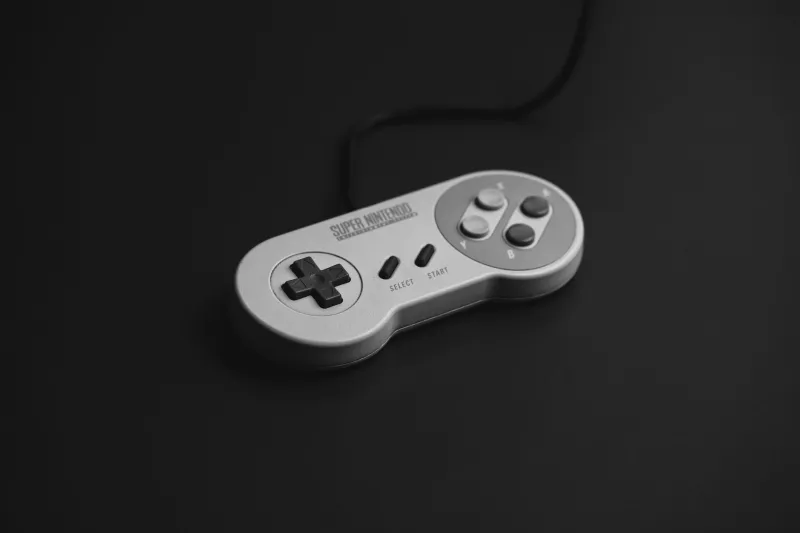
Pull up Twitch on any given Tuesday night and you might be surprised by what's trending. Sandwiched between the latest AAA shooter and whatever battle royale is hot this week, you'll often find someone blazing through Super Mario 64, or grinding Pokémon Red, or attempting a deathless run of Mega Man 2. Games that are, in some cases, older than the people watching them.
Retro gaming isn't a niche hobby anymore. It's a full-blown cultural reset — and for a generation of American millennials who grew up with a Super Nintendo controller in their hands, it feels less like looking backward and more like finally coming home.
The Numbers Don't Lie
The retro gaming market has quietly become a serious business. Limited Run Games, a publisher that specializes in physical releases of classic and indie titles, has reported consistent year-over-year growth, with some limited print runs selling out within minutes. The secondary market for original cartridges and consoles on platforms like eBay has seen sustained price increases, with complete-in-box SNES games regularly fetching prices that would have seemed absurd a decade ago.
Meanwhile, Nintendo's own retro offerings — the NES Classic, SNES Classic, and the steady drip of classic titles on Nintendo Switch Online — have all performed well beyond initial projections. Analogue, a company that makes premium FPGA-based retro hardware, sells out virtually every product it launches. The demand is real, it's sustained, and it's growing.
So what's driving it?
Nostalgia Is the Easy Answer — But It's Not the Whole Story
Sure, there's a comfort factor at play. Millennials who are now in their 30s and early 40s are rediscovering the games of their childhood during a period of, let's be honest, pretty significant adult stress. There's something genuinely soothing about booting up The Legend of Zelda: A Link to the Past when the real world feels like too much.
But if nostalgia were the only engine here, you'd expect retro gaming to be a solo, private experience — people quietly replaying old favorites late at night. Instead, it's become a communal, public, and increasingly competitive phenomenon. Something else is going on.
Modern Gaming Gave People a Reason to Leave
Talk to anyone deep in the retro gaming community and it doesn't take long before the conversation turns to frustration with the current state of big-budget releases. The grievances are familiar: $70 base prices followed immediately by season passes and battle passes, day-one DLC, always-online requirements for single-player games, aggressive monetization targeting younger players, and a general sense that modern AAA games are designed to extract money rather than deliver experiences.
"I spent sixty bucks on a game last year and felt like I was being nickel-and-dimed the entire time," said Marcus, a 34-year-old from Columbus, Ohio, who now spends most of his gaming time on a modded original Xbox loaded with classics. "I went back to Morrowind and it just... gave me everything. No strings attached. I forgot that was possible."
That sentiment — the idea that older games offered complete experiences without hidden costs — comes up constantly in retro gaming spaces. When a game shipped on a cartridge in 1994, that was the game. All of it. No updates, no microtransactions, no content roadmap. For players exhausted by the modern monetization treadmill, that simplicity feels almost radical.
Emulation Made It Accessible
One of the biggest accelerants for retro gaming's resurgence has been the dramatic improvement and accessibility of emulation software and hardware.
Devices like the Analogue Pocket, the Steam Deck running RetroArch, and a whole ecosystem of affordable handheld emulators (the Miyoo Mini and RG35XX have become cult favorites) have made it easier than ever to carry decades of gaming history in your pocket. Legal questions around emulation remain complicated, but the practical reality is that millions of Americans have access to enormous libraries of classic games with minimal friction.
For younger players discovering retro titles for the first time, this accessibility is everything. You don't need to track down an original cartridge or pay collector prices to experience Chrono Trigger or EarthBound. You just... play it. And increasingly, they are.
Speedrunning Turned Old Games Into New Sports
If you want to understand why a 1996 Nintendo 64 platformer can pull thousands of concurrent viewers on Twitch in 2024, speedrunning is a big part of the answer.
The speedrunning community has transformed classic games into something genuinely exciting to watch even for people who've never played them. Events like Games Done Quick — a charity speedrunning marathon held twice a year — regularly raise millions of dollars and introduce enormous audiences to games they'd never otherwise encounter. Watching someone exploit a precise glitch to skip half of Super Mario 64 in real time is legitimately thrilling, even if you have no attachment to the game.
Speedrunning also gives classic games a competitive scene that keeps them fresh. New routes are discovered. World records fall. Drama unfolds in real time. A game that shipped 30 years ago can generate genuine breaking news within its community when someone finds a new skip or sets a new world record. That's a remarkable kind of longevity.
Content Creators as Cultural Archaeologists
YouTube channels dedicated to retro gaming history, deep dives, and retrospectives have built massive audiences. Creators like Scott the Woz, Slope's Game Room, and countless others have made careers out of exploring gaming history with genuine enthusiasm and academic rigor. For younger viewers, these channels function as a kind of gateway — a way to discover what they missed before they were born.
This content ecosystem has created a feedback loop: creators cover classic games, audiences get curious, audiences seek out the games, demand increases, prices go up, more creators cover the games. Retro gaming has become self-sustaining in a way that suggests it's not just a trend.
What This Means for the Industry
The retro gaming wave is a pretty clear message to the games industry, if anyone's listening. Players don't just want new — they want good. They want complete experiences that respect their time and money. They want games designed to be played, not monetized.
The indie game scene has picked up on this energy, which is part of why pixel-art games with SNES-era sensibilities keep finding huge audiences. Titles like Shovel Knight, Celeste, and Axiom Verge didn't succeed just because they looked old-school. They succeeded because they felt like the classic games people loved — generous, focused, and built to be enjoyed.
For now, though, a whole lot of American gamers are perfectly happy reaching for a cartridge that's older than their mortgage. And honestly, given what's on the shelves at $69.99 these days, it's hard to blame them.