Logged In, Tuned Out: How Online Multiplayer Stopped Being About People
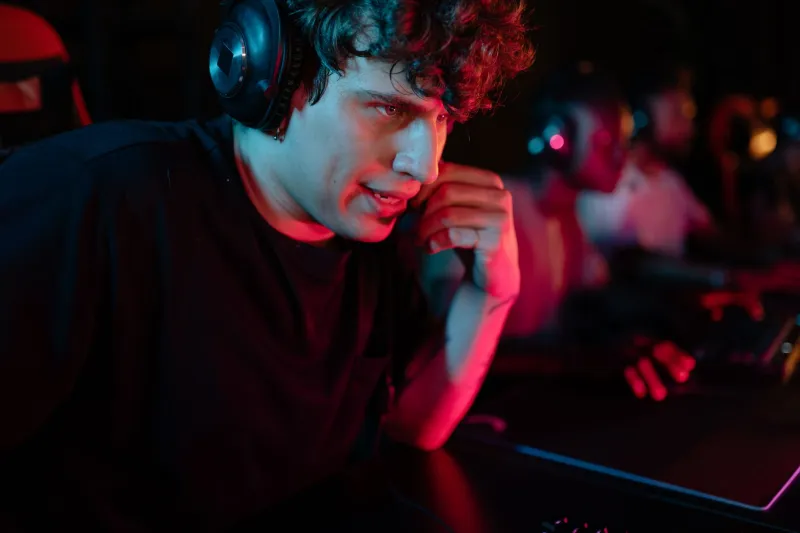
There's a specific kind of loneliness that hits when you're in a 64-player lobby, headset on, waiting for the match to start — and nobody's talking. Not because they can't. Because nobody bothers anymore.
Online multiplayer was supposed to be the great connector. Back when Halo 2 was king of Xbox Live and you could actually hear your neighbor's kid screaming through the walls about a headshot, gaming felt genuinely social. Messy, loud, sometimes infuriating — but alive. Fast forward to today, and millions of Americans are logging dozens of hours a week into multiplayer titles while reporting that gaming feels increasingly hollow. What happened?
The Promise vs. The Reality
Game publishers have never been shy about selling the dream. Trailers show laughing friends conquering raids together, strangers becoming squadmates, communities forming around shared victories. The marketing language around multiplayer games leans hard into words like together, community, and connection.
But the actual experience of booting up a modern multiplayer title tells a different story. You're dropped into a matchmaking system that treats you as a data point — a skill rating to be balanced against other skill ratings. The algorithm doesn't care if you're having fun. It cares about keeping your session time up and your churn rate down. You're matched with strangers you'll never see again, thrown into a high-stakes match, and then cycled out. Repeat.
Psychologists who study social behavior have a term for what's happening here: ambient sociality without genuine connection. You're technically around other people. You're even cooperating with them. But there's no relationship being built. It's the gaming equivalent of riding a packed subway car — you're surrounded by humans and somehow completely alone.
Voice Chat Killed the Vibe
Remember when voice chat felt like a feature? Now it's basically a liability.
Anyone who's spent time in a random Call of Duty lobby, an Overwatch ranked queue, or even a casual Fortnite squad knows the drill. The second someone opens their mic, the odds are roughly 50/50 that what follows is going to be either total silence or something you'd never want your kid to hear. Slurs, rage, unsolicited commentary on your performance — the social contract of online voice chat has eroded to almost nothing.
A 2023 survey by the Anti-Defamation League found that nearly 70% of online gamers in the US reported experiencing harassment while playing multiplayer games. The response from most players? Mute everyone. Which is a perfectly logical self-defense mechanism — and also completely defeats the purpose of a social gaming experience.
Game studios know this is a problem. Most of them just haven't figured out what to do about it that doesn't cost them engagement metrics.
Matchmaking as a Relationship Killer
Here's something the industry doesn't talk about enough: modern matchmaking systems are fundamentally anti-social by design.
When you queue up for a match in most big-budget multiplayer titles, you're paired with people based on performance data, not compatibility. There's no persistent squad system that rewards you for sticking with the same group. There's no in-game reason to learn your teammates' names or playstyles. You're interchangeable parts in a machine optimized for balance, not belonging.
Compare that to the old days of server browsers — a feature that's basically extinct now. When you could pick a specific server and come back to it every night, communities actually formed. You knew the regulars. You had in-jokes. You had history with these people. That kind of organic relationship-building has been almost entirely stripped out of mainstream multiplayer design in favor of frictionless, anonymous queuing.
The business logic makes sense: server browsers create uneven experiences and retention headaches. But the cultural cost has been enormous.
Performance Anxiety at Scale
There's another layer to this that doesn't get discussed enough — the psychological weight of playing in front of strangers who are judging your performance in real time.
Modern multiplayer games are built around visible metrics. K/D ratios, damage numbers, objective scores, end-of-match leaderboards. Every session is a public performance review. For casual players especially, this creates a low-grade anxiety that makes gaming feel more like work than play. You're not just having fun anymore — you're being evaluated.
This performance pressure is a huge reason why so many players retreat into single-player experiences or simply stop playing altogether. The social promise of multiplayer curdles into social stress.
The Indie Counter-Revolution
Not everyone's given up on the idea that games can actually bring people together, though. A quiet movement of indie developers and community-driven platforms is actively trying to rebuild what mainstream multiplayer broke.
Games like Palia — a cozy MMO designed specifically around cooperative, low-stakes interaction — have built surprisingly passionate communities by removing competition entirely. There are no leaderboards. No ranked modes. No one screaming at you for missing a shot. Players report genuinely making friends through the game, which sounds almost quaint until you realize how rare that's become.
Stardew Valley's multiplayer mode, while simple, has become a social hub for players who want cooperation without combat pressure. Platforms like Roblox (flawed as it is) have maintained genuine community spaces because user-generated content gives players a reason to keep returning to the same spaces with the same people.
Even Discord, for all its chaos, has become the de facto "third place" for gaming communities — a space outside the game itself where actual relationships can develop. The irony is that the most meaningful social experiences in gaming today often happen around the game, not inside it.
Can Mainstream Gaming Course-Correct?
Some studios are starting to pay attention. Destiny 2 has experimented with more robust clan tools and social features. Final Fantasy XIV has long been celebrated for its unusually healthy community, partly because its design philosophy explicitly rewards cooperation over competition. A few battle royale titles have added persistent squad features that let you re-queue with the same teammates.
But these are incremental fixes to a structural problem. As long as the dominant business model in multiplayer gaming prioritizes engagement metrics over genuine community health, the incentives will keep pointing in the wrong direction.
The good news? Players are voting with their time. The explosive growth of cozy games, co-op indie titles, and community-driven platforms suggests that there's a massive, underserved audience hungry for multiplayer experiences that actually feel human.
Maybe the future of online gaming isn't louder or faster or more competitive. Maybe it's just... friendlier.
And honestly? After years of muting strangers in ranked lobbies, that sounds pretty great.